ION - Making of
Service, Experience design
2024
The Design Process
The design process for ION followed a user-centered and research-driven approach. It began with an in-depth research phase that included market analysis, trend studies, exploration of chronic diseases, user needs, personalized medication solutions, and expert interviews. Based on this research, key conclusions were drawn, identifying the most suitable technologies and defining the project’s value proposition. Clear objectives were then established to guide the development. In the ideation phase, we focused on the user experience, crafted a coherent design language, and tackled identified challenges through concept exploration and storyboarding. The process continued with multiple refinement rounds and prototyping, leading to the development of a final, validated proposal tailored to user needs and industry demands.
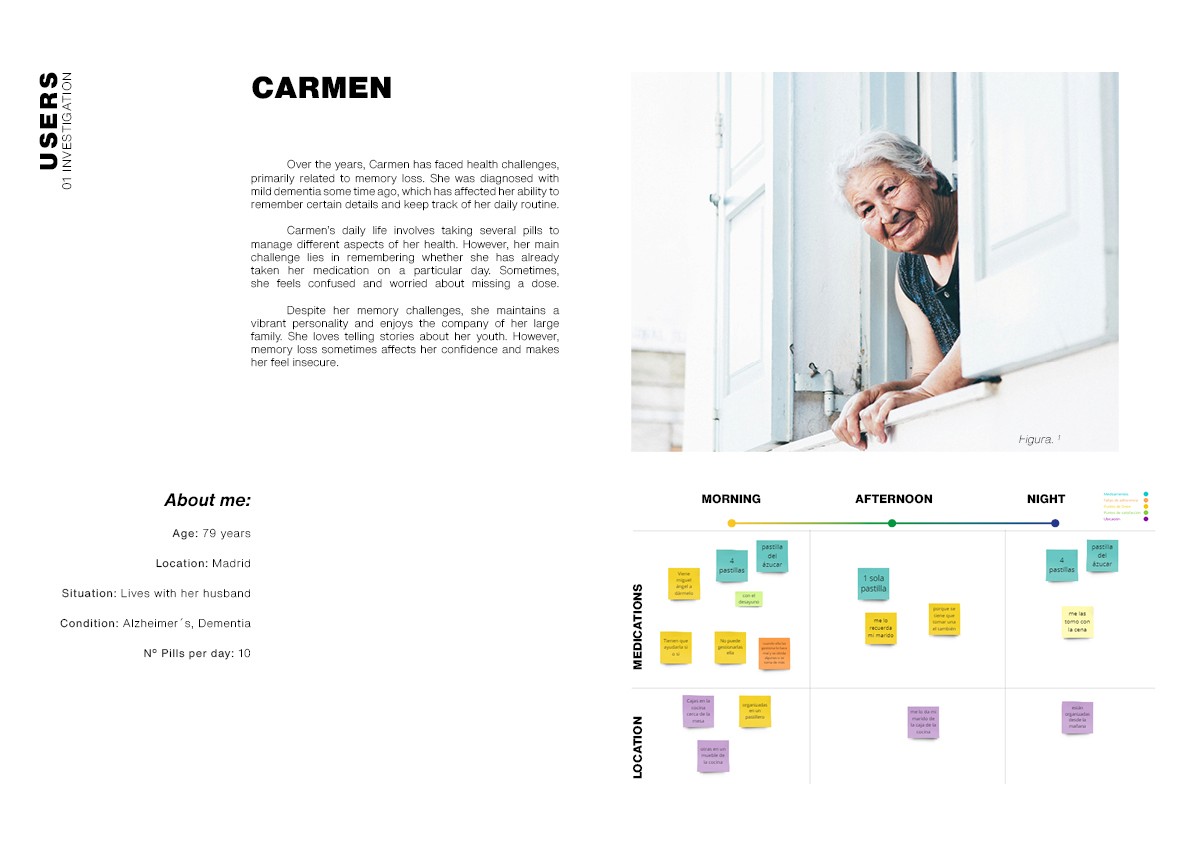
Based on these insights, we mapped out user experience workflows that prioritized clarity, simplicity, and reassurance. These workflows were designed not only for the product itself but for the entire system and experience, taking into account all stakeholders, including patients, pharmacists, and medical professionals. The goal was to create a cohesive ecosystem where each actor plays a clear and supportive role in the medication journey.
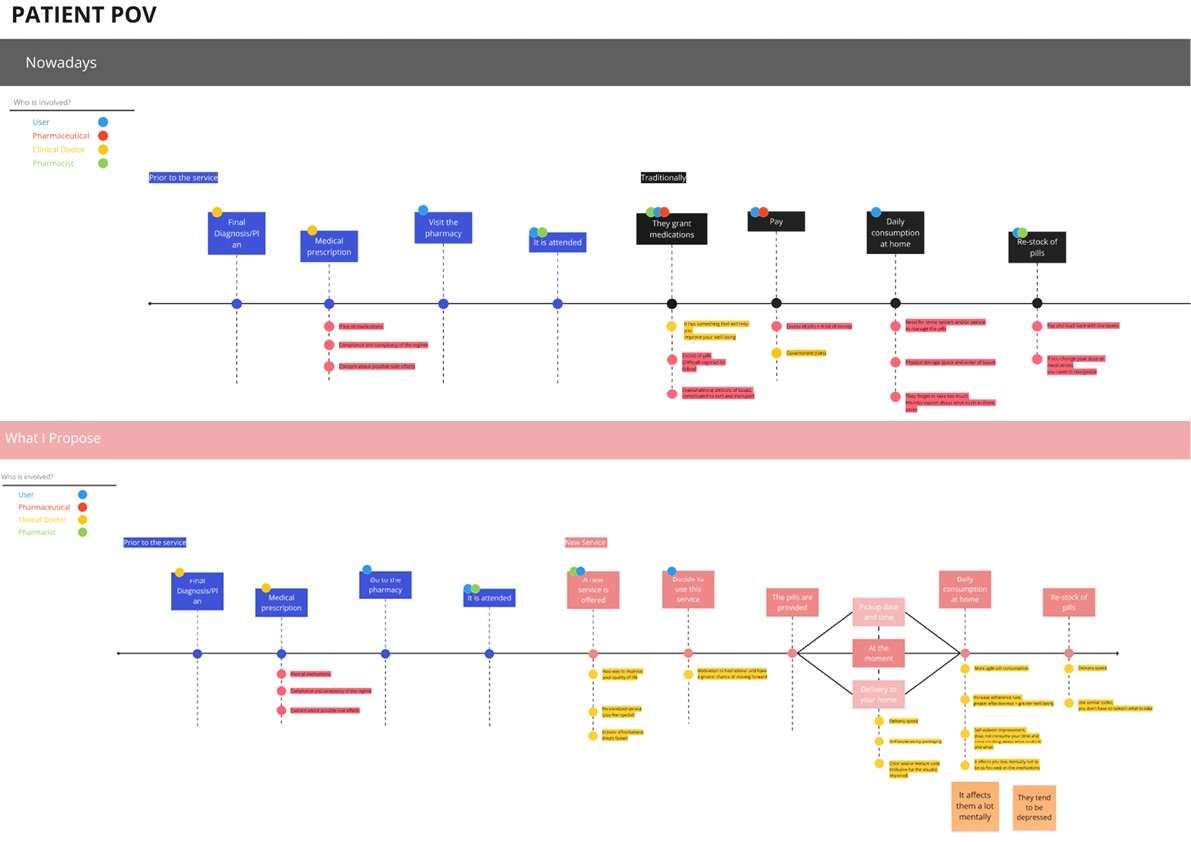
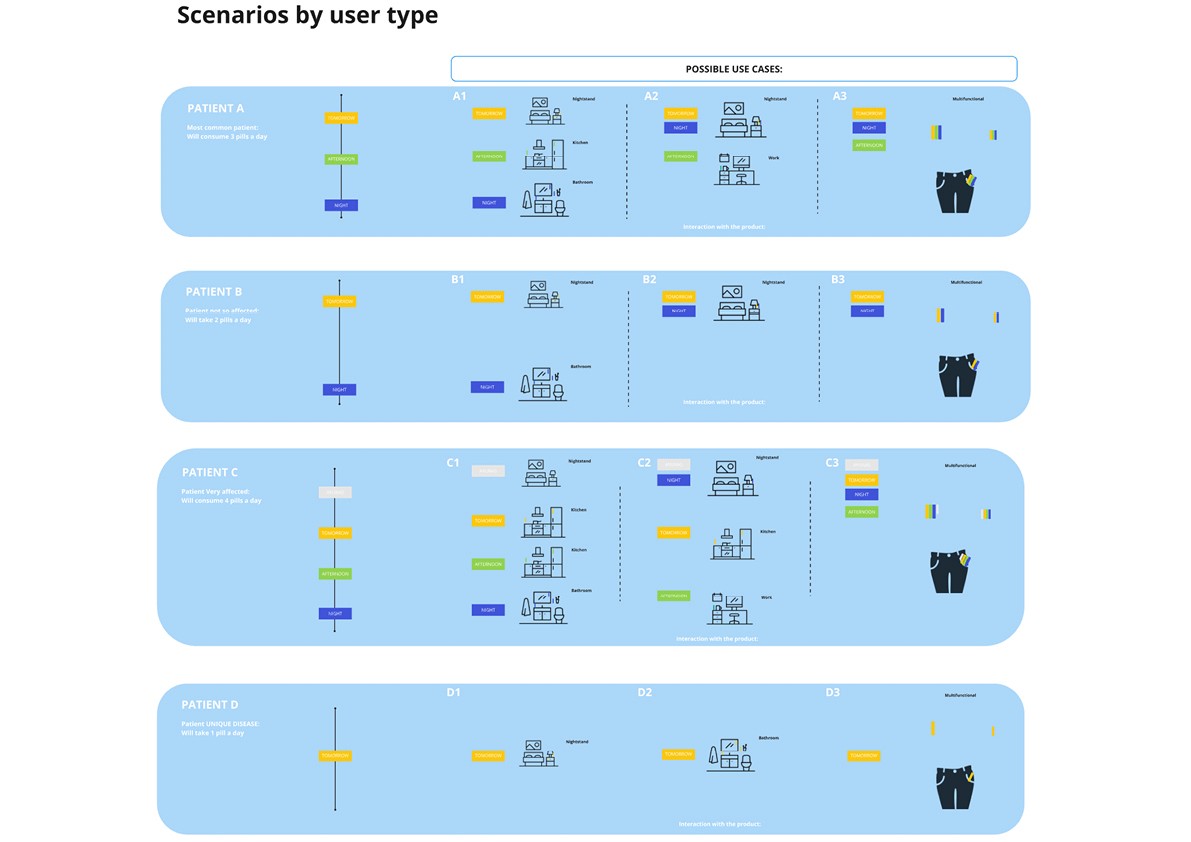
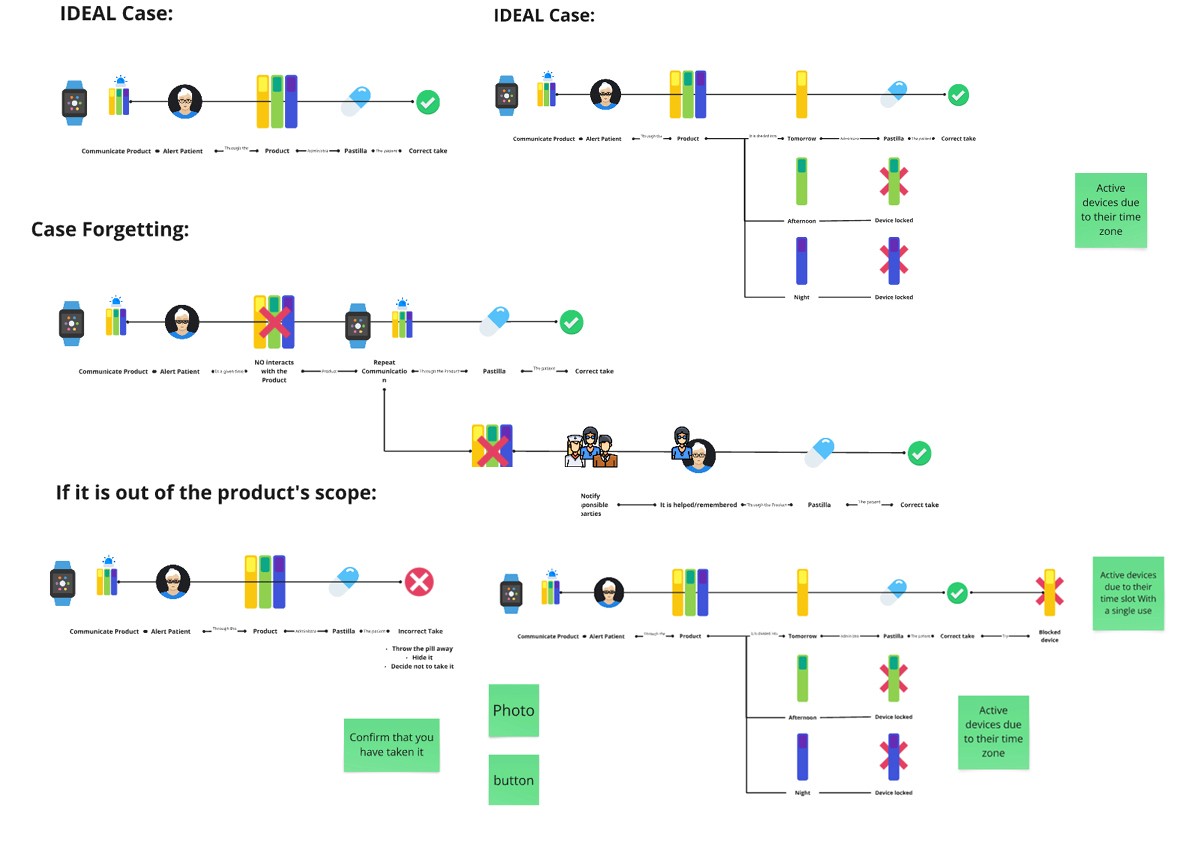
The service aimed to support users in forming consistent habits, using intuitive interactions and visual cues to guide them through their daily medication process. Accessibility was a core consideration, with attention to readability, touch-friendly interfaces, and adaptable features for different cognitive and physical abilities.
Throughout the ideation and prototyping stages, feedback loops with users ensured that the solution remained aligned with their real-world needs. Every detail from tone of voice to interface structure was crafted to empower users, reduce anxiety, and build trust in the system.
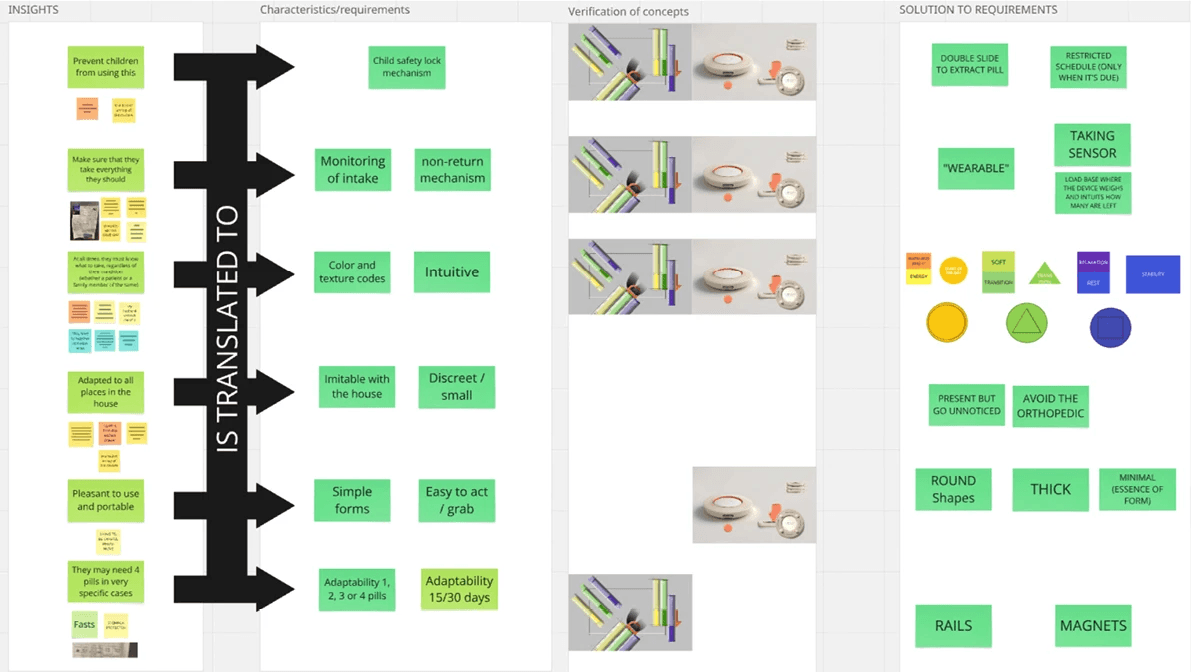
IDEATION
Building on the user-centered insights, the ideation phase translated emotional, functional, and practical needs into tangible design elements. A core design decision was to structure the user’s interaction with the product around three distinct daily moments morning, midday, and night each carrying a specific visual and tactile identity to support cognitive and emotional recognition.
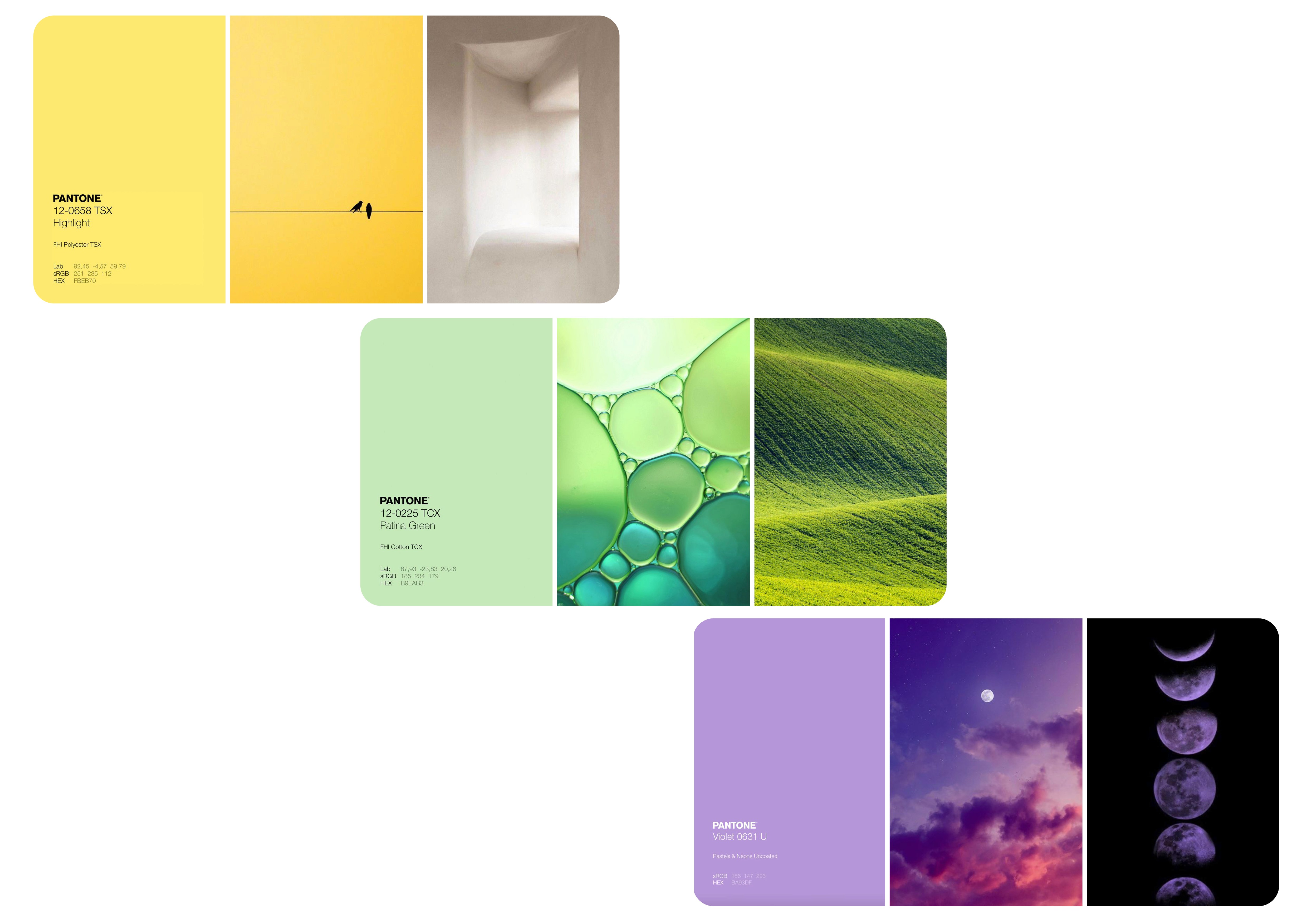
Colors, shapes, and textures were explored to create intuitive associations: bright, smooth designs for mornings (yellow, orange) evoked energy and clarity; midday interactions used green hues, textured surfaces suggest focus and transition; evening elements leaned on calming colors like blue and violet, paired with soft shapes to promote rest and reassurance.
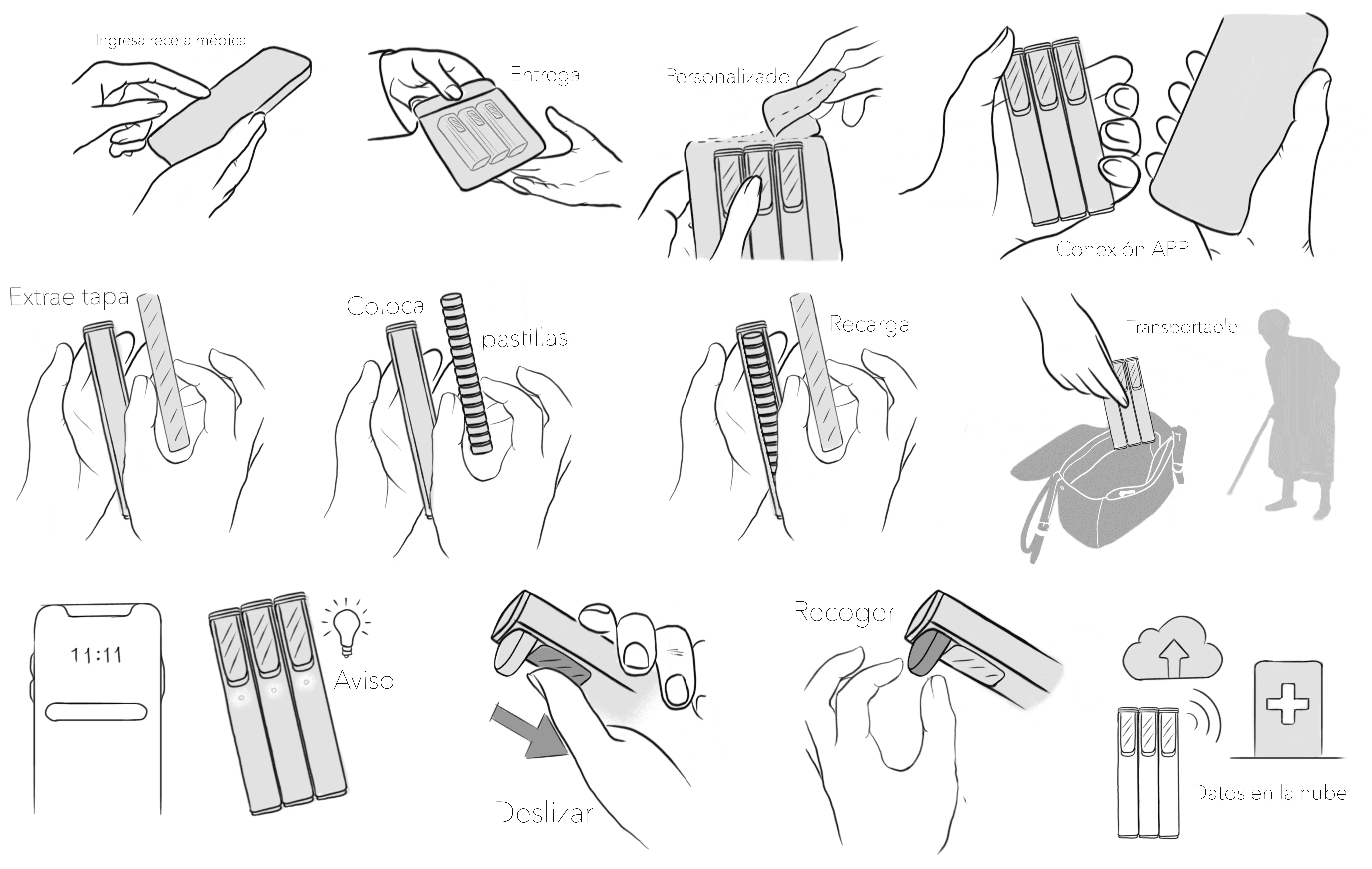
A key challenge was to rethink the current standard of pill design uniform, white, and generic towards a more meaningful and supportive experience. Concepts considered how medication is delivered and interacted with throughout the day, from the user’s perspective.
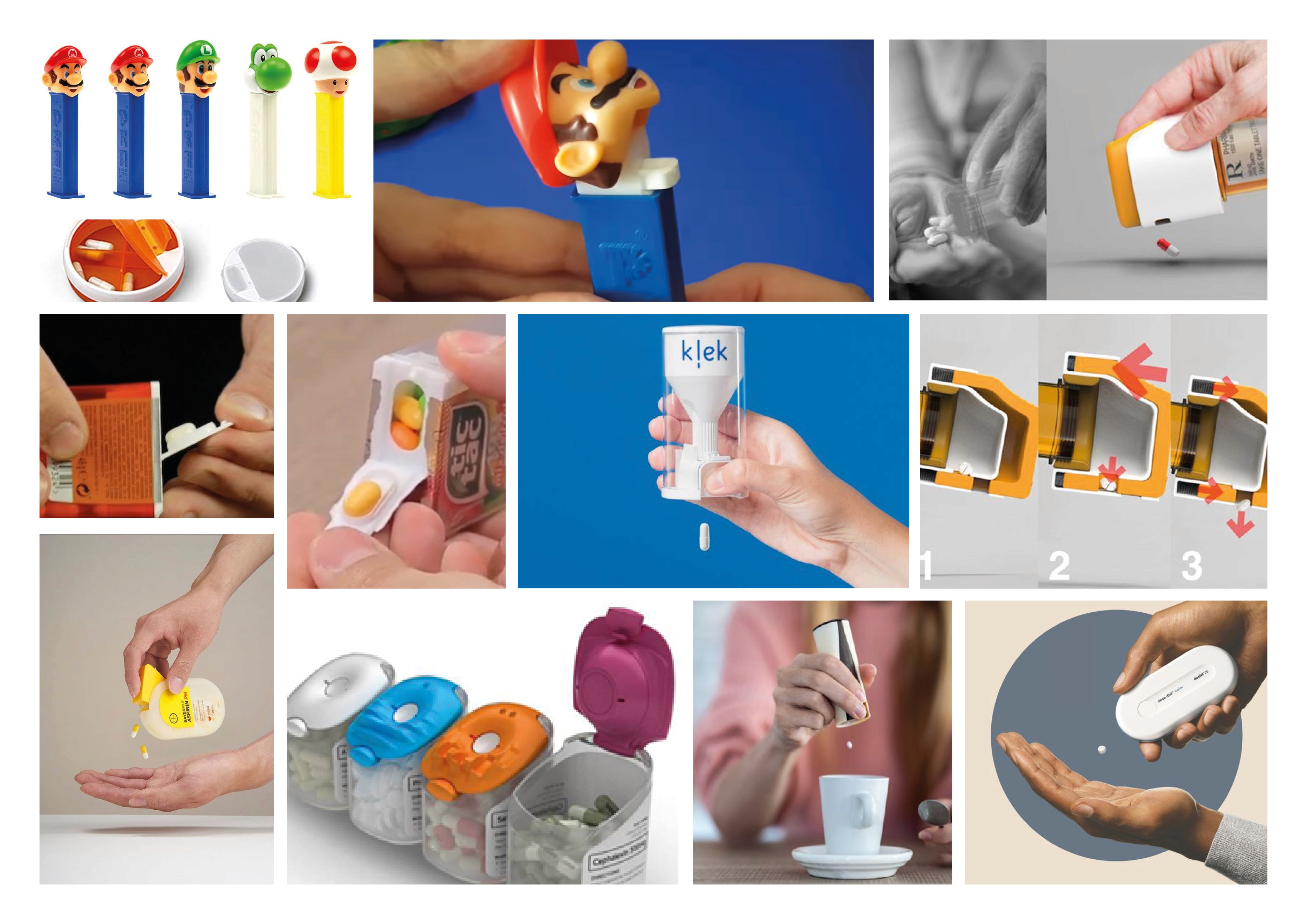
The ideation also included an exploration of delivery mechanisms, drawing inspiration from physical systems rather than electronics to ensure reliability and ease of maintenance. Mechanisms such as spring-loaded compartments and aligned-release systems were prototyped and evaluated.
Final concepts were iteratively refined and validated through continuous engagement with users. This process helped refine core product attributes and ensured each solution was grounded in real-life contexts and user behaviors.